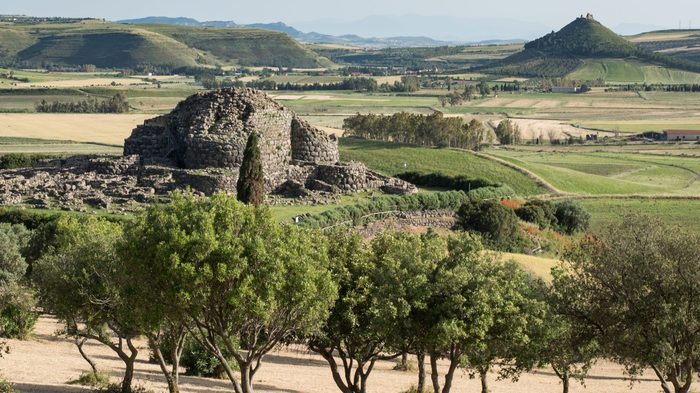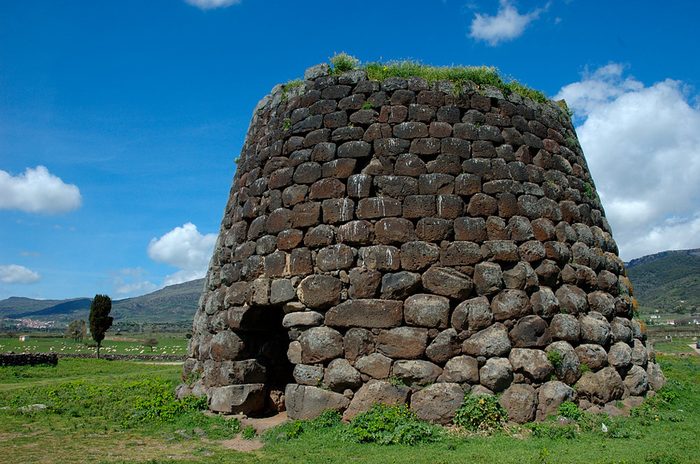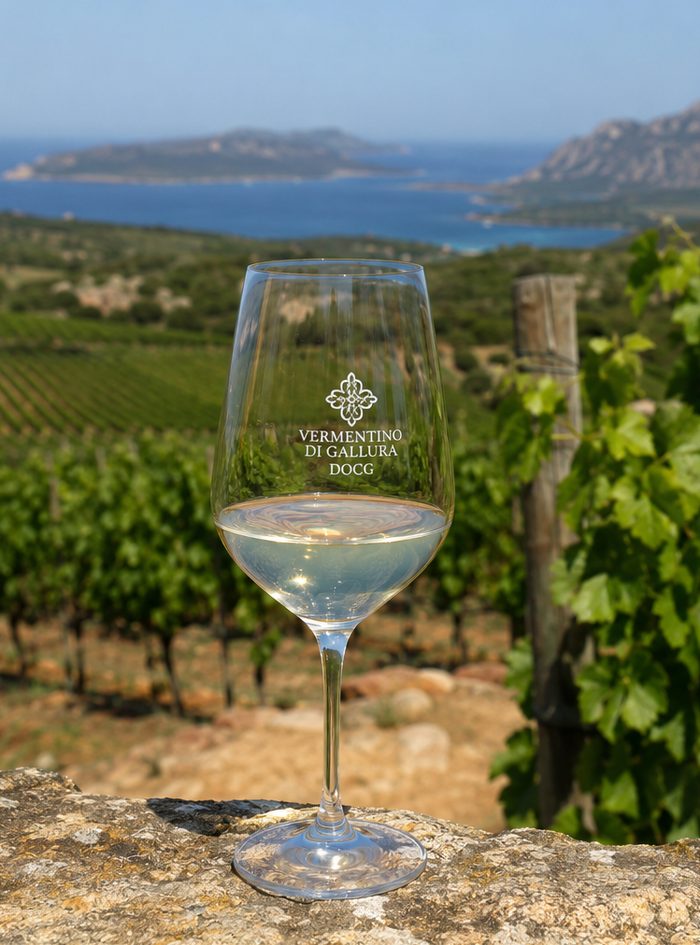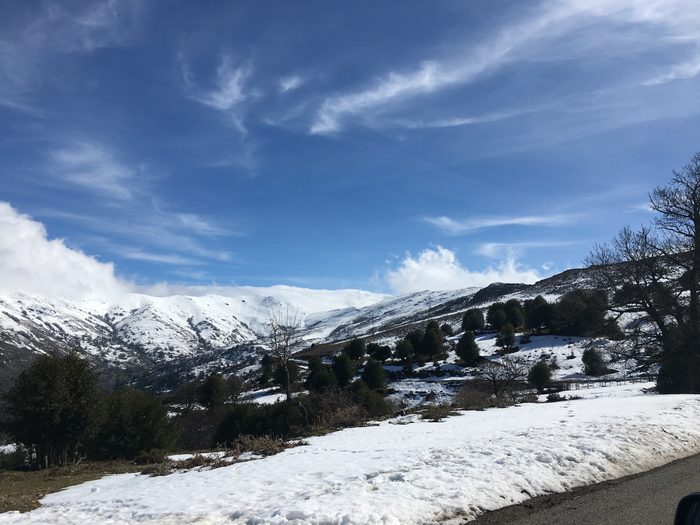
In short: the Blue Zone isn't a marketing invention. It's a real area of inland Sardinia, across Barbagia and Ogliastra, where science first measured a concentration of centenarians unmatched anywhere else on Earth — and it's precisely where the term "Blue Zone" itself was born.
There's no entrance, no ticket, no visitor centre: Sardinia's Blue Zone is a cluster of inhabited mountain villages, with their everyday life, their small shops and their churches. Understanding what it really is, before you go, helps you visit it the right way — with curiosity and respect, not expecting a themed attraction.
What a Blue Zone is (and why the first one was born here)
In 2004, demographers Gianni Pes and Michel Poulain published the AKEA study, the most rigorous verification of population longevity conducted up to that point, based on Sardinian civil records dating back to the 19th century. Analysing the Ogliastra municipalities with the highest number of male centenarians, the two researchers literally drew a blue circle on the map — and the colour stuck: from then on, "Blue Zone" has referred to any region in the world with scientifically verified longevity.
Sardinia thus became the prototype, the benchmark against which the four other Blue Zones identified afterwards were measured: Okinawa in Japan, Nicoya in Costa Rica, Ikaria in Greece and Loma Linda in California. The topic was later popularised worldwide, through documentaries and books that made the term familiar to a broad audience. The scientific debate, however, remains open: as of 2026, an international team of researchers is still proposing more rigorous, measurable criteria for defining a Blue Zone — a sign that Sardinia continues to be an active case study, not just a tourism label.
Barbagia and Ogliastra: the villages of longevity
Sardinia's Blue Zone covers around 14 municipalities in the central-eastern inland area, almost all sitting between 600 and 900 metres above sea level, with populations often under 1,500: among the most cited are Villagrande Strisaili, Seulo, Arzana, Talana, Urzulei, Baunei, Ulassai and Perdasdefogu. In Perdasdefogu, researchers documented in 2014 the longest-lived family in the world: eight siblings, adding up to 828 years of life between them.
Not a theme park
This needs to be said clearly, to avoid setting the wrong expectations: there's nothing to "visit" in the classic sense. These are villages like any other in Barbagia, where longevity isn't announced on a sign but lived in everyday life — an elderly person sitting outside their home, a village shop, the slow rhythm of the Supramonte and Gennargentu valleys. This is exactly why it's worth travelling with someone who knows the area: without a local guide, it's easy to drive through it without really seeing it at all.
What explains (in part) this longevity
Studies point to a combination of factors, not a single magic cause, and it's worth being wary of anyone promising a guaranteed formula. Among the most observed elements:
- Traditional diet: carasau bread, pecorino cheese, legumes, barley and Cannonau wine, rich in antioxidants, eaten in moderate, seasonal quantities.
- Physically active life: generations of shepherds and farmers used to walking every day across hilly and mountainous terrain, without needing to "exercise" in the modern sense.
- Community and intergenerational bonds: extended families, respect for the elderly, a strong sense of belonging to the village.
- Geographic and genetic isolation: valleys historically hard to reach, which over the centuries favoured a more genetically homogeneous population.
None of these factors alone explains everything: it's the combination, observed across multiple generations, that makes Barbagia and Ogliastra a unique case.
How to visit it with Sardinia Guide
We don't run "Blue Zone tours" with an entrance ticket, because there isn't one: we build tailor-made itineraries through inland Sardinia that combine trekking in the Supramonte and Gennargentu, tastings of pecorino and Cannonau at local wineries, and encounters with Barbagia's culture — from the murals of Orgosolo to the Mamuthones carnival. It's the most honest way to approach these places: not as spectators of a phenomenon, but as guests of a territory that keeps living at its own pace.